

A defense attorney was cross-examining a police officer during a felony trial.
Q: Officer, did you see my client fleeing the scene?
A: No sir, but I subsequently observed a person matching the description of the offender running several blocks away.
Q: Officer, who provided this description?
A: The officer who responded to the scene.
Q: A fellow officer provided the description of this so-called offender. Do you trust your fellow officers?
A: Yes sir, with my life.
Q: With your life? Let me ask you this then officer – do you have a police evidence locker room in the station: somewhere you can also change your clothes in preparation for your daily duties?
A: Yes sir, we do.
Q: And do you have a locker in that room?
A: Yes sir, I do.
Q: And do you have a lock on your locker?
A: Yes sir.
Q: Now why is it, officer, if you trust your fellow officers with your life, that you find it necessary to have a lock in the police evidence locker room you share with those officers?
A: You see sir, we share the building with a court complex, and sometimes defense attorneys have been known to walk through that room.
That funny exchange uses legal exaggeration. However on a serious tone, the joke raises a real concern: the need for security measures within organizations built on trust. So how safe are police evidence lockers?
The answer requires looking back at historical practices. We’ll examine some of the safeguards, both physical and procedural, that existed yesterday and exist today. Modern systems are designed with security in mind, yet history offers many vulnerabilities the unscrupulous have exploited.
In the early days of law enforcement, evidence might have been stored in many places within a police station – perhaps in a spare room, a desk drawer, or even just left in the investigating officer’s possession. Record-keeping was often done manually, with numerous errors or omissions. This informal approach naturally led to instances of lost, misplaced, or even tampered evidence.
Anecdotal accounts from the past paint a picture of lax security practices. For example, older officers might recall stories, sometimes told with a hint of dark humor, about evidence like firearms being stored unsecured in a communal area, or drug samples being kept in envelopes that could easily be opened. These weren’t necessarily malicious acts, but rather a reflection of the times and the available resources.
Chain of custody, a crucial concept in maintaining the integrity of evidence, was often less rigorously enforced. There might have been a logbook, but the transfer of evidence between officers or departments could be informal, relying on trust and memory instead of strict protocols that could traced.
One particularly illustrative, perhaps even fabricated, anecdote from the mid-20th century involves a small-town police department. The evidence locker, as it was generously called, was essentially a dusty cupboard in the corner of the station. One day, a significant piece of evidence in a robbery case – a crowbar – went missing. A frantic search lead to the discovery of the crowbar being used by the janitor to prop open a window on a hot day. While this might sound comical, it highlights the very real risks associated with inadequate security and a lack of clear protocols.
Over time, as forensic science became more sophisticated and the importance of secure evidence handling in legal proceedings became increasingly recognized, standards began to improve. The latter half of the 20th century saw a gradual shift towards dedicated evidence rooms or lockers with basic security features like locks and keys. However, even these improvements were not foolproof. Stories abound of evidence rooms with inadequate climate control leading to the degradation of biological samples, or poorly maintained locks that could be easily picked.
A significant turning point in the evolution of evidence locker security came with high-profile cases where mishandled or lost evidence cast doubt on the integrity of the investigations. The O.J. Simpson trial in the mid-1990s, while focusing more on the collection and analysis of evidence at the crime scene, also brought attention to the crucial role of proper evidence storage. The intense scrutiny highlighted the potential for mishandling to undermine even the most compelling cases. This era saw a greater emphasis on establishing clear protocols, training personnel in evidence handling, and investing in more secure storage facilities.
In the early 21st century, the advent of technology brought about another wave of advancements in evidence locker security. Electronic access control systems, utilizing RFID cards, PIN codes, or even biometric authentication, became increasingly common. These systems offered significant advantages over traditional keys, providing audit trails of who accessed the locker and when. This accountability helped to deter unauthorized access and provided a record in case of any discrepancies.
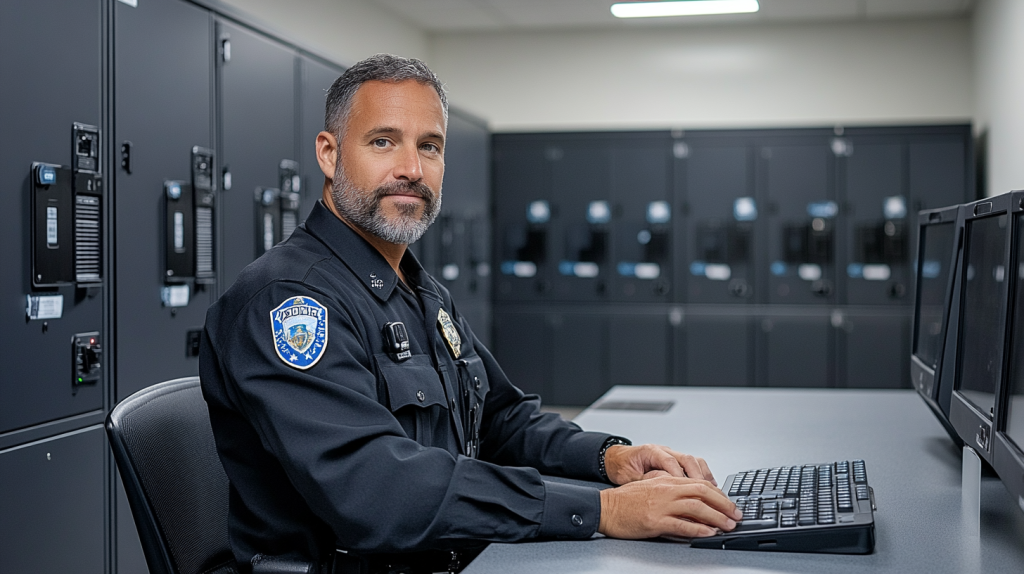
Modern evidence lockers in 2025 often incorporate features like dual-sided access, allowing for the secure transfer of evidence without direct contact between individuals, further minimizing the risk of tampering or contamination. Compartments come in various sizes to accommodate different types of evidence, and many are equipped with individual locking mechanisms for enhanced security. Closed-back and pass-through models cater to different needs and facility layouts, with pass-through lockers being particularly useful for creating a secure chain of custody when transferring evidence from a public reception area to a secure storage room.
Despite these advancements, the system is not entirely without vulnerabilities. Anecdotes from recent years, though perhaps less frequent due to improved security, still emerge. For instance, there have been cases of errors in logging evidence, leading to temporary misplacement. While not necessarily a security breach of the locker itself, it highlights the importance of the human element in maintaining the integrity of the evidence. Even the most sophisticated locking system can be undermined by improper procedures or human error.
The increasing reliance on digital evidence presents new challenges for law enforcement. While physical lockers are designed for tangible items, digital evidence such as videos, emails, and electronic files requires secure digital storage solutions and robust cybersecurity measures to prevent unauthorized access, modification, or deletion. Recent incidents involving data breaches at police departments serve as a reminder that the security of digital evidence is just as crucial as the security of physical evidence.
The safety of police evidence lockers has improved dramatically over the course of history, moving from informal storage methods to highly secure, technologically advanced systems. However, the human element and the evolving nature of evidence, particularly with the rise of digital data, mean that vulnerabilities can still exist. While anecdotal accounts from the past often highlighted physical security shortcomings, modern concerns extend to procedural errors and the safeguarding of digital information.