
Visual illusions have long fascinated and perplexed human minds, revealing the intriguing quirks of our perception. These optical phenomena deceive our senses, challenging our understanding of reality. In this post, we’ll explain six famous visual illusions, which have stumped the imagination of generations. They shed light on the tricky ways our brains interpret the world.
The Müller-Lyer Illusion
The Müller-Lyer illusion is a classic example of an optical illusion that distorts our perception of line lengths. In the classic experiment it consists of two lines with arrow-like fins pointing inwards or outwards. Our brain mistakenly perceives the line with outward fins as longer, even though both lines are actually of equal length. This illusion suggests that our brains are influenced by the surrounding context in which objects are presented.
The Ponzo Illusion

The Ponzo illusion plays with our depth perception by manipulating the size and distance cues of objects. By creating an illusion of perspective using converging lines, two identical horizontal lines appear to be different lengths. The brain interprets the upper line, which seems farther away, as larger than the lower line, which appears closer, leading to a misconception of size.
The Kanizsa Triangle

The Kanizsa triangle demonstrates our brain’s tendency to complete fragmented information and perceive meaningful patterns. In the original illusion, three Pac-Man-like shapes with missing sections are arranged in a manner that creates the perception of a white triangle in the center. Despite the absence of a physical triangle, our brains automatically “fill in the gaps” to construct the shape.
The Rubin’s Vase

The Rubin’s vase illusion showcases the phenomenon of figure-ground perception. When presented with an ambiguous image of a vase or two faces in profile, our brains can only perceive one interpretation at a time: either the vase or the faces. This illusion highlights the brain’s constant interpretation of visual stimuli, making rapid decisions about what is the foreground and background.
Motion Induced Blindness
Motion-induced blindness reveals the limitations of our visual attention. By focusing on a central point while surrounding it with moving objects or patterns, we can experience the disappearance of stationary objects within our visual field. This illusion demonstrates how our attention can be easily diverted, causing us to miss important details in our environment.
The Hermann Grid Illusion
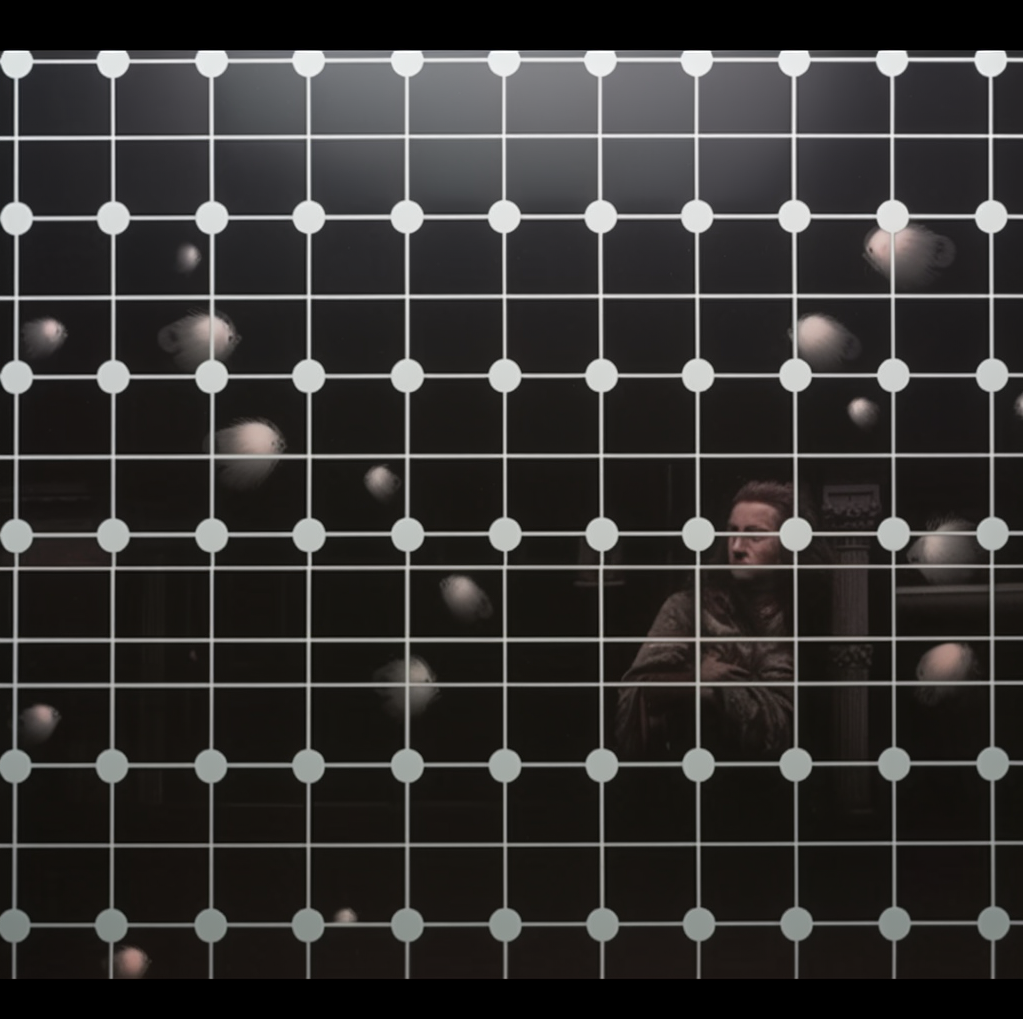
The Hermann grid illusion is a striking example of how our eyes and brain can create illusions of perception. When a grid of black squares is overlaid with white dots at the intersections, we perceive gray blobs in the gaps between the black squares. This illusion arises from the interaction between light-sensitive cells in our eyes and the brain’s processing of visual information.
What Do Illusions Show?
Visual illusions challenge our assumptions about the reliability of our senses, reminding us that our perception is not always an accurate representation of reality. These six famous illusions offer a glimpse into the fascinating ways our brains interpret visual stimuli, showcasing the intricate and sometimes deceptive nature of human perception.